
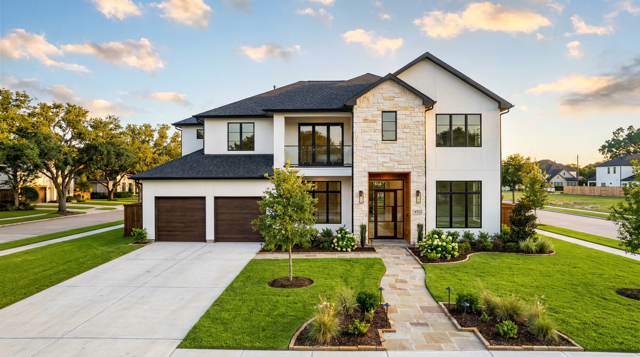
If you’re looking at your first investment property, new construction in Greater Houston is one of the most forgiving places to start. Houston issues roughly half of all residential building permits in Texas — that volume gives investors options, leverage, and real builder incentive packages that didn’t exist three years ago. Combined with builder warranties, lower maintenance, and steady rental demand in master-planned communities, the math gets to 6–8% cash-on-cash and 3–5% annual appreciation without ever swinging a hammer.
I’m Eddie Weir, REALTOR® with REMAX in Greater Houston. I work with first-time investors across Katy, Cypress, Pearland, Spring, Sugar Land, Richmond, and the rest of the metro’s growth corridors. This guide is what I’d want a brand-new investor to know before they walk into a builder’s model home.
Why new construction makes sense for a first investment
New homes carry several advantages over resale properties that matter especially when you’re new to landlording — and Houston’s builder-heavy market makes those advantages more accessible in 2026.
What you get with new:
- Lower maintenance for the first 5–10 years. New HVAC, new roof, new plumbing, new appliances. You avoid the surprise repairs that derail new landlords — a roof replacement on an older Houston home runs $8,000–$15,000 by itself.
- Builder warranties reduce risk. Most Houston builders offer a tiered warranty: 1 year for workmanship defects, 2 years for mechanical and distribution systems (plumbing, electrical, HVAC), and up to 10 years for structural defects.
- Incentives lower your upfront costs. Builders in 2026 are offering closing-cost contributions, rate buydowns (2-1 and 3-2-1 temporary buydowns), design upgrades, and flex cash — sometimes totaling $15,000–$30,000 in value. That comes straight off your cash-to-close and improves your year-one return.
- Energy efficiency reduces operating costs. New homes built to current Texas energy codes have better insulation, low-E windows, and higher-efficiency HVAC. In Houston’s climate, that’s $100–$200/month in lower utilities — savings that either pad your NOI or make your rental more attractive to tenants.
- Better tenant quality in MPCs. New construction in Elyson, Bridgeland, Sienna, and The George attracts families drawn by new schools, amenities, and community infrastructure. Better tenants mean lower vacancy, fewer maintenance calls, and steadier income.
How much does a new construction investment property cost in Houston in 2026?
Pricing varies a lot by location, builder, lot size, and floor plan, but first-time investors can find viable rental candidates starting in the high $200,000s in a few communities. The median price for single-family in Houston is $330,000 as of March 2026 according to the Houston Association of REALTORS®, and new construction typically runs 5–15% above median depending on submarket.
New construction price ranges by Houston submarket (spring 2026):
| Area / Community | Price Range | Investor Notes |
|---|---|---|
| Katy / Elyson | $350,000 — $550,000 | Toll Brothers, Perry Homes, Highland Homes active. Strong Katy ISD demand drives rent premiums. |
| Cypress / Bridgeland | $320,000 — $500,000 | Rapid-growth corridor. Cy-Fair ISD. Multiple builders offering incentives on inventory homes. |
| Richmond / The George | $280,000 — $450,000 | New 1,500-acre MPC. Lower entry point. Fort Bend County growth path. |
| Pearland / Shadow Creek Ranch | $300,000 — $420,000 | Medical Center commuter demand. Affordable entry with a strong rent-to-price ratio. |
| Spring / The Woodlands area | $340,000 — $550,000 | ExxonMobil and corporate relocation demand. Premium rents but higher buy-in. |
| Richmond / Evergrove | $400,000 — $700,000+ | Toll Brothers and Tri Pointe. 1,655 planned homes. Higher price point, strong appreciation potential. |
Ranges reflect typical asking prices as of spring 2026. Verify current pricing with each builder. Source: HAR MLS and Houston-area builder sales offices.
What builder incentives are available to Houston investors in 2026?
Houston builders in 2026 are competing aggressively. Active listings are up 8.7% to nearly 35,000 homes across the metro, and builders are motivated to move completed inventory. That gives you real negotiating leverage.
Common incentives I’m seeing right now:
- Closing cost contributions: $5,000–$15,000 toward your closing costs. Reduces cash required at the table and bumps your cash-on-cash return.
- Rate buydowns: Many builders offer 2-1 or 3-2-1 temporary buydowns through preferred lenders. On a $350,000 home, a 2-1 buydown can save $400–$600/month in year one — money that goes straight to your bottom line.
- Design center upgrades: Free or discounted upgrades on counters, flooring, appliances, fixtures. For investors, the right upgrades (functional, not flashy) attract higher-quality tenants. Some builders are offering $10,000–$20,000 in upgrade credits.
- Flex cash / price reductions: A lump sum the buyer applies to closing costs, rate buydown, or sticker price. Chesmar Homes has offered up to $20,000 in select communities.
One thing to know up front:
Not every builder incentive is available if you disclose investor intent on day one — some programs are aimed at primary residence buyers. I can tell you which builders are investor-friendly and which incentives apply to investment purchases. Some investors choose to live in their first investment property for 12–24 months before converting it to a rental, which unlocks primary residence financing rates (typically 0.5–0.75% lower than investment rates) and the full incentive package.
What’s the expected ROI on a Houston new construction rental?
Returns depend on price, rent, expenses, and financing. Most Houston investors should expect rental yields between 6% and 8% on well-selected new construction. Here’s a realistic year-one walkthrough.
Sample analysis: New construction home in Cypress, TX
| Item | Amount |
|---|---|
| Purchase price | $370,000 |
| Down payment (20%) | $74,000 |
| Closing costs (net of builder credit) | $4,000 |
| Total cash invested | $78,000 |
| Monthly rent | $2,000 |
| Annual gross rent | $24,000 |
| Mortgage P&I @ 6.75% | $1,920/mo ($23,040/yr) |
| Property taxes (2.1%) | $7,770/yr |
| Insurance (landlord policy) | $4,200/yr |
| HOA | $2,400/yr |
| Maintenance reserve (0.5% — lower because it’s new) | $1,850/yr |
| Vacancy reserve (8%) | $1,920/yr |
| Property management (10%) | $2,400/yr |
| Total annual expenses | $43,580 |
| Annual net cash flow | –$19,580 |
Wait — the cash flow is negative?
Yes — and this is a reality check I run honestly with every first-time investor. At spring 2026 investment-property rates (6.5–7%), many Houston new construction rentals show negative or break-even monthly cash flow on paper. That’s normal in an appreciating market and it doesn’t mean the investment is bad. Here’s what’s actually happening:
- Mortgage paydown. Your tenant pays down your principal every month. On the example above, ~$4,800 of equity is built in year one — equity built with someone else’s money.
- Appreciation. Houston new construction in growth corridors (Cypress, Katy, Richmond) is appreciating 3–5% annually. On a $370,000 home, that’s $11,100–$18,500 in equity per year.
- Tax benefits. Depreciation, mortgage interest deduction, property tax deduction, and operating expense write-offs offset the paper loss and reduce your overall tax burden. Talk to a CPA, but many Houston investors show a paper loss while building real wealth.
- Rent growth. Houston rents are projected to grow 2–5% annually by submarket. Within 2–3 years, modest rent increases can shift the property into positive cash flow — especially with a fixed-rate mortgage.
Total return (cash flow + principal paydown + appreciation + tax benefits) on the example above lands around $0–$5,000 in year one and grows to $8,000–$15,000+ annually as rents move and paydown accelerates. Think of new construction in Houston as a wealth-building strategy, not a pure cash-flow play at today’s rates.
Mistakes first-time investors make on Houston new construction
I see the same handful of mistakes over and over. Avoiding them can save thousands and years of headaches.
Top mistakes:
- Skipping a buyer’s agent. Many first-time investors walk into a model home and sign a contract without representation. The on-site agent works for the builder, not you. A buyer’s agent negotiates on your behalf, reviews the builder contract (which heavily favors the builder by default), and makes sure you’re getting every available incentive. The builder typically pays the buyer’s-agent commission, so this representation costs you nothing out of pocket.
- Choosing upgrades that don’t increase rent. First-time investors overspend on cosmetic upgrades. Premium counters and tile might add $30,000 to the purchase price but only $50–$100/month in rent. Focus on what tenants actually pay for: covered patios, fenced yards, smart-home features, energy-efficient appliances.
- Ignoring HOA rental restrictions. Some MPC HOAs restrict or prohibit rentals entirely. Others impose minimum lease terms (often 12 months) or cap the number of rentals in the community. I review HOA documents before any investment purchase to confirm the property can be rented.
- Underestimating Texas property taxes. No state income tax, but property taxes run 2.0–2.3% of assessed value for investment properties (no homestead exemption applies). On a $370,000 home that’s $7,400–$8,500/year. Investors moving from lower-tax states are routinely surprised.
- Missing the rental timeline in deed restrictions. Some builders include deed restrictions blocking rentals for the first 1–2 years after purchase to protect owner-occupancy ratios during build-out. Verify before closing.
- Skipping the independent inspection. “New” doesn’t mean “perfect.” Even new construction can have improper grading, HVAC issues, plumbing leaks behind walls. Hire an independent inspector before closing — the builder warranty doesn’t substitute for inspection.
Which Houston builders work well for investment properties?
Not all builders are equally investor-friendly. Some actively court investors with dedicated programs and flexible policies; others discourage investment purchases via HOA restrictions or incentive limitations. The builders below are currently active in Houston’s highest-growth corridors and have track records that work well for investor buyers.
Builders actively building investor-friendly homes (2026):
- Perry Homes — one of Houston’s largest private builders. Active in Bridgeland, Elyson, Sienna, and many Fort Bend and Harris County communities. Quality construction and strong resale values.
- Highland Homes — mid-to-premium price point. Strong presence in Katy and Cypress. Floor plans with rental appeal.
- Chesmar Homes — competitive pricing with generous incentive packages (up to $20,000 in upgrades in select communities). Active in Richmond and Sugar Land.
- David Weekley Homes — premium build quality. Active in multiple Houston corridors. Strong warranty program.
- Castlerock Communities — affordable entry point. Active in Spring, Conroe, and northwest Houston.
- LGI Homes — budget-friendly new construction. Move-in ready inventory often available with appliances and landscaping included. Popular with investors targeting max cash flow.
I maintain working relationships with sales teams across these builders. I can help you compare inventory, negotiate the incentive package, and identify which opportunities actually pencil for your scenario.
FAQs: First-time investors + Houston new construction
Do I need a real estate agent to buy new construction in Houston?
Not legally required, but yes — I strongly recommend it. The builder’s on-site sales agent represents the builder. A buyer’s agent reviews the contract, negotiates incentives, coordinates inspections, and protects your interests through the transaction. The builder typically pays the commission, so representation costs you nothing out of pocket.
Can I rent the home out immediately after closing?
In most Houston communities, yes — but verify before signing the builder contract. Some HOAs restrict rentals for the first 12–24 months, impose minimum lease terms, or cap the percentage of rentals allowed in the community. I review these restrictions as part of due diligence for every investor client.
Inventory home or build-from-scratch as a first-time investor?
For most first-time investors, a completed or near-completed inventory home is the better choice. You close faster (often 30–45 days), avoid construction delays, lock in a known price, and start collecting rent sooner. Builders also negotiate more aggressively on inventory they want to move. Custom or semi-custom builds make more sense for experienced investors with specific floor-plan needs.
What mortgage rate should I expect for an investment property in 2026?
Investment property rates run 0.5–0.75% higher than primary residence rates. As of spring 2026, expect rates in the 6.5–7.25% range for well-qualified borrowers with 20–25% down and strong credit. Builder rate buydowns can drop the effective rate significantly in years one through three.
How much cash should I plan for as a first-time investor?
For a new construction investment in the $300,000–$400,000 range, plan on $60,000–$85,000 in upfront capital: 20% down, closing costs net of builder credit, initial reserves for vacancy and maintenance, and any minor touch-up costs. I provide a detailed cost breakdown for every investment property before clients make an offer.
Run Your Numbers
Let’s see if this works for your situation.
I’ll walk you through the build-out in the corridor you’re considering, which builders are negotiating right now, and what a realistic year-one return looks like. No script, no pressure — just a conversation.
About Eddie: I’m Eddie Weir, REALTOR® with REMAX Signature — a top 1% producer with ABR and LUXE designations and 20-plus years closing deals across Greater Houston. I work with buyers, sellers, and investors at every price point: first homes, move-ups, luxury builds, rental portfolios, 1031 exchanges, and relocations from out of state. Popular submarkets I’m in regularly include Katy, Cypress, The Woodlands, Sugar Land, Pearland, Memorial, and the Heights — but my service area is the entire metro: Harris, Brazoria, Fort Bend, and Montgomery counties. If you’re thinking about a real estate move in Greater Houston, I can help.
Reach me: 832-343-8383 · eddie@eddieweir.com · TREC License #560899
“Show up, tell the truth, close on time.”
Sources & data: Houston Association of REALTORS® MLS (March 2026) · Houston Agent Magazine · Tricoast Homes · Steadily. Builder incentive information is subject to change — verify current offerings before purchasing. Each office independently owned and operated. Equal Housing Opportunity. Last updated: May 13, 2026.