
Home / Energy Corridor
West Houston,
near your work.
Compare homes near your west-Houston workplace, with a dated MLS sample, route reference points and address-level school, tax and flood checks.




Where should I live if I work in the Energy Corridor?
Begin with your actual office entrance along the I-10 corridor. Compare nearby Energy Corridor and Memorial homes with Spring Branch, Katy and Cinco Ranch, then widen the search if the home or budget tradeoff works for you. I am Eddie Weir, REALTOR® with REMAX Signature, and I can help compare the drive and total cost without treating a suburb-wide estimate as an address-level promise.
Updated October 1, 2026. The following MLS and drive-time samples are dated September 24, 2026.
How do the housing choices compare?
Swipe the table to see every column.
| Search area | Homes sampled | Middle 50% | Home types in sample |
|---|---|---|---|
| Energy Corridor | 281 | $250,000–$549,000 | single-family, townhomes, condos |
| Memorial | 307 | $218,000–$1,292,000 | single-family, townhomes, condos |
| Spring Branch | 554 | $349,000–$600,000 | single-family, townhomes, condos |
| Katy | 2637 | $300,000–$500,000 | single-family, townhomes, condos |
| Sugar Land | 632 | $348,000–$685,000 | single-family, townhomes, condos |
Source: Houston Association of REALTORS® MLS. Dated active sale listings, Coming Soon and invalid prices ($1,000 or less or not numeric) excluded; single-family homes, townhomes and condos combined. These broad city or HAR market-area cohorts are not small-neighborhood boundaries or matched-property appraisals. Middle 50% means the 25th–75th percentile; rounded to $1,000. Exact cohort definitions are available with this guide’s research record.
What did the Tuesday 8 AM driving sample show?
Swipe the table to see every column.
| Area | Google-resolved origin | Typical range | First-listed route |
|---|---|---|---|
| Memorial | Memorial Dr & Voss Rd, Hunters Creek Village, TX 77024 | 12–26 min | I-10 W |
| Spring Branch | Long Point Rd & Blalock Rd, Houston, TX 77080 | 10–24 min | I-10 W |
| Katy | Katy City Hall, 901 Avenue C, Katy, TX 77493 | 24–50 min | I-10 E |
| Cinco Ranch | Cinco Ranch Blvd & S Mason Rd, Houston, TX 77450 | 20–45 min | S Mason Rd and I-10 E |
| Fulshear | City of Fulshear City Hall, 6611 W Cross Creek Bend Ln, Fulshear, TX 77441 | 28–55 min | Westpark Tollway E Toll route in sample |
| Bridgeland | Lakeland Activity Center (Bridgeland Residents Only), 16902 Bridgeland Landing Dr, Cypress, TX 77433 | 30–70 min | Barker Cypress Rd |
| Towne Lake | The Boardwalk at Towne Lake, 9955 Barker Cypress Rd, Cypress, TX 77433 | 24–55 min | Barker Cypress Rd |
| Cross Creek Ranch | Cross Creek Ranch Welcome Center, 6450 Cross Creek Bend Ln, Fulshear, TX 77441 | 28–55 min | Westpark Tollway E Toll route in sample |
| Sugar Land | City of Sugar Land, 2700 Town Center Blvd N, Sugar Land, TX 77479 | 26–55 min | Hwy 6 N |
| Harvest Green | The Village Farm @Harvest Green, J7WM+M3, Richmond, TX 77406 | 26–55 min | FM 1093 E |
| Aliana | 10510 W Airport Blvd, Richmond, TX 77407 | 24–55 min | Hwy 6 N |
Historical planning sample: Google Maps typical-traffic driving ranges, checked September 24, 2026, for arrival at 8:00 AM on Tuesday, September 29, 2026. First-listed route; tolls and highways were not avoided. These are estimates from the resolved reference points shown, not measured trips or a current traffic forecast. Recheck the exact home, work entrance and shift; allow separately for parking, walking and any shuttle.
Destinations: TMC’s resolved place near the main medical campus; Energy Corridor’s resolved point at Eldridge Houston, 757 N Eldridge Parkway, near I-10; Downtown at Texas Avenue and Main Street. These are reference points, not every employer entrance.
Before selecting a home, check its FEMA flood designation, review flood history separately and confirm the assigned schools. A nearby bayou, reservoir or workplace is not a substitute for property-specific review.
What does the Energy Corridor name cover?
The Energy Corridor District describes its boundary along I-10 from Kirkwood Road to west of Barker Cypress Road, extending south along Eldridge Parkway beyond Briar Forest Drive. A real-estate search label can cover a different area. Check the district’s own boundary information and the property address rather than assuming every west-Houston subdivision is inside that boundary.
What should I compare beyond the commute?
Compare home type, condition, current HOA obligations, property taxes, insurance and the address-level school assignment. Obtain a current tax estimate and an insurance quote for each finalist. For a wider search, see Memorial, Spring Branch and Katy.
Active in Energy Corridor, Texas
Homes for sale in Energy Corridor, right now.
A look at what’s active in Energy Corridor today, with prices that range widely by neighborhood. Open the live map any time to see every home.
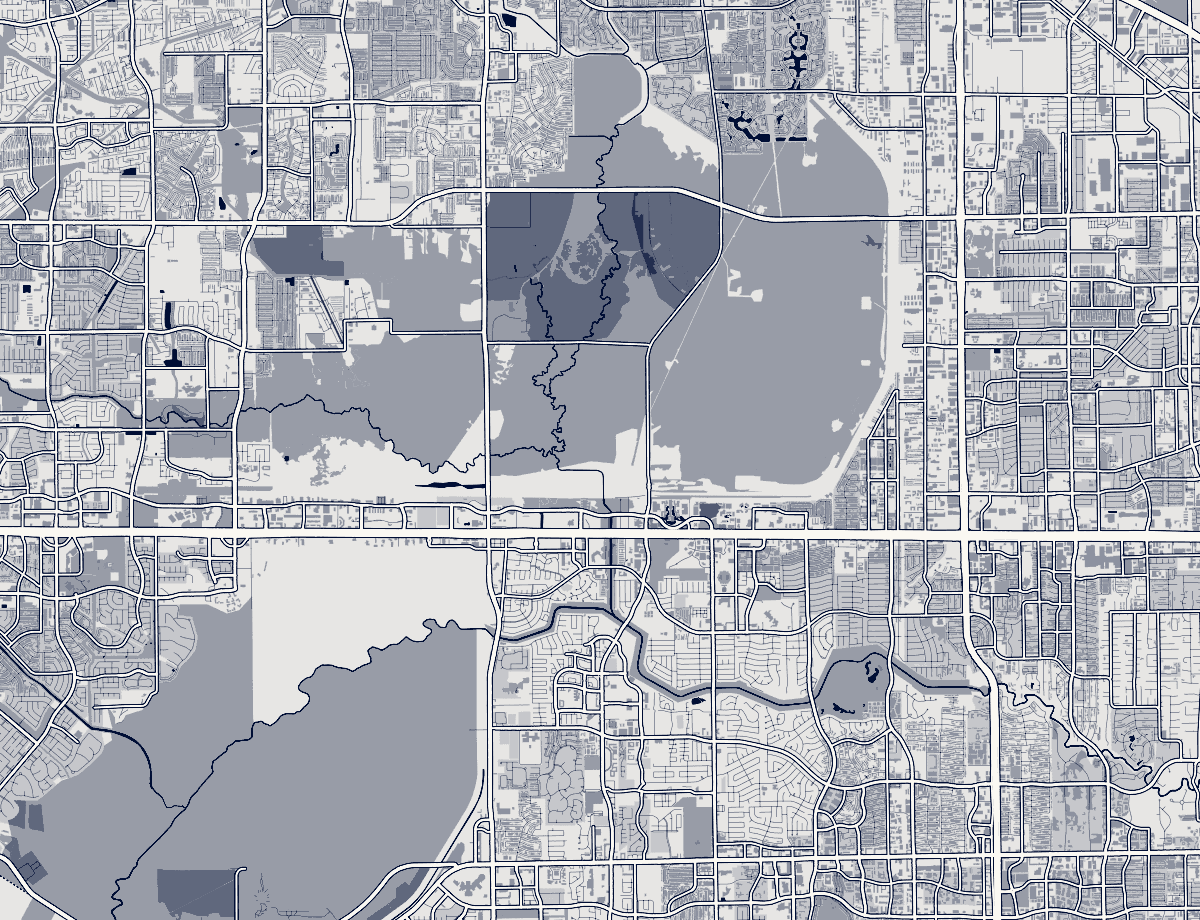 Open the live Energy Corridor map
Orientation only. Areas are approximate, not exact listing locations.
Newest active single-family listings in Energy Corridor per the Houston Association of REALTORS® MLS. The map is for orientation only, not live listing positions. Base map © OpenStreetMap contributors, © CARTO.
Continue Exploring
Compare other Houston areas.
If you are weighing other work locations or housing options, compare Memorial, The Woodlands and Galleria using your actual route and budget. The Houston housing-market dashboard provides dated market context; the Q2 2026 market brief is historical reading, not today’s pricing.
Use the buyer guide, seller guide or investment guide for the relevant process. For school context, begin with Houston ISD guidance and verify the actual district by address. Contact Eddie to compare the specific homes you are considering.
Ready to talk through the Energy Corridor?
Bring your work address, schedule, budget and candidate homes to a 30-minute call. We can compare the home and route together.
Schedule an Energy Corridor Conversation