
Home / Moving to Houston
Moving to Houston, handled.
4th-largest city, zero state income tax, and a relocation timeline that runs on its own clock. Neighborhoods, schools, timing, and the order of operations that keeps it simple.




The honest pitch
Why are people moving to Houston?
People move to Houston for a job and for a lower state-tax bill on the same income. The city itself is the fourth-largest in the United States: the Census Bureau’s Vintage 2024 estimates put Houston at 2,390,125 residents on July 1, 2024, behind New York, Los Angeles, and Chicago. From July 1, 2023 to July 1, 2024 the city added 43,217 residents, the second-largest numeric gain in the country.
The job magnet most out-of-state buyers already know is the Texas Medical Center. TMC’s About page calls it the world’s largest medical complex and lists 120,000+ total employees. Energy offices along I-10, downtown professional services, and NASA’s Johnson Space Center in Clear Lake are the other corridors I route first. I do not have a sourced headcount for those last three, so I am not inventing one.
Texas has no personal income tax. That starts the conversation. It should not end it. The trade is a local property-tax bill, summed from the entities on one parcel, not a citywide rate. The tax section below puts a household at $200,000 of taxable income next to the official California, New York, and Illinois brackets.
I am Eddie Weir, a Houston REALTOR® with REMAX Signature, ABR and LUXE. License #560899. This page is the starting point I send relocating buyers: commute, budget, flood, tax, then the spoke that matches the decision you are actually making.
Sources: U.S. Census Bureau, Vintage 2024 Population Estimates, released May 2025 (Houston city 2,390,125; rank 4; numeric gain 43,217). Texas Medical Center About page, tmc.edu/about-tmc, 120,000+ employees, pulled September 20, 2026. Texas Comptroller, no state property tax, pulled September 20, 2026.
Relocating to Houston?
If you are buying from out of state, I help you narrow the search before you fly in, check the flood history of the specific address before you make an offer, and work out the property tax and any MUD (municipal utility district) tax before you settle on a price. If you can’t be in Houston to sign, I work with your lender and title company to set up a remote closing.
The honest math
What does it cost to live in Houston?
The housing number that moves is the sale price. For single-family homes that went under contract in the second quarter of 2026, the Greater Houston median price was $344,858. That is Houston Association of REALTORS® MLS via Repliers: 23,238 single-family sales that went under contract from April 1 to June 30, 2026 and have since closed. Median days to offer was 29. The dates are under-contract dates, not closings, and a sale does not show up in this data until it closes a few weeks later. So I use the most recent quarter that has finished closing, not the last 90 days, which would undercount.
That metro median is not Bellaire and it is not Katy. The city rows sit in the budget section. The honest out-of-state comparison is housing, plus the state income-tax line you stop paying, minus the Texas property-tax line you start paying.
State income tax, a household at $200,000 of taxable income
Official 2025 and 2026 brackets, $200,000 of taxable income, married filing jointly. Taxable income is after deductions, not salary. Federal tax does not change when you cross a state line. New York City and Yonkers are not in the New York State figure.
| State | Official rule | Tax on $200,000 taxable |
|---|---|---|
| California | FTB 2025 Schedule Y: $6,403.94 + 9.3% of the amount over $145,448 | $11,477 |
| New York (state only) | IT-2105-I 2026 MFJ: $8,391 + 5.90% of the amount over $161,550, plus required worksheet 2 ($333 + $807) | $11,800 |
| Illinois | IDOR individual rate 4.95% of net income, effective July 1, 2017 | $9,900 |
| Texas | No personal income tax | $0 |
California math: $200,000 minus $145,448 is $54,552. Then $6,403.94 + (0.093 x $54,552) = $6,403.94 + $5,073.34 = $11,477.28, about $11,477. Source: California Franchise Tax Board, 2025 Tax Rate Schedules, Schedule Y, pulled September 20, 2026.
New York State math: $200,000 minus $161,550 is $38,450, so the rate schedule gives $8,391 + (0.059 x $38,450) = $10,659.55. A joint filer with New York adjusted gross income above $161,550 must use Tax computation worksheet 2, which adds a $333 recapture base and up to an $807 incremental benefit. At $200,000 of taxable income, the $16,050 joint standard deduction alone puts adjusted gross income at $216,050 or more, so the full amount applies: $10,659.55 + $333 + $807 = $11,799.55, about $11,800. That is a flat 5.9 percent of $200,000. Source: New York State Department of Taxation and Finance, Instructions for Form IT-2105, tax year 2026, worksheet 2 on page 3 and the rate schedule on page 10. State only.
Illinois math: $200,000 x 0.0495 = $9,900. Source: Illinois Department of Revenue, Income Tax Rates, pulled September 20, 2026.
So a household at $200,000 of taxable income would pay about $11,477 in California, about $11,800 in New York State, $9,900 in Illinois, and $0 in Texas. That is the income-tax line only. It is not “you will be ahead by $11,477.” Texas property tax is local and parcel-specific. I am not carrying forward a leftover $15,000 to $20,000 savings range.
HOA dues are the other monthly line people forget. They are set community by community, so get the current dues and any transfer fee for the specific address before you offer.
Longer comparison: Houston cost of living. The tax section below is the Texas-specific math.
Housing source: Houston Association of REALTORS® MLS via Repliers, single-family sales that went under contract April 1 to June 30, 2026, pulled September 20, 2026. Income-tax sources named in the paragraphs above.
Start with the job
Where should I live in Houston by commute?
Start with the job address, then pick the areas that keep you on the same corridor. Houston is large enough that two neighborhoods that look close on a map can be very different drives, and I will not publish a minute range I cannot source. Pin the daily destination first.
Most people who move here move for work, so the office decides the first cut. Price, days to offer, and home type by area are on where to live in Houston. Homes near major employers goes employer by employer. School-age kids: read Houston school districts before the kitchen. In Texas the district is its own government, and the line ignores the city limit.
Energy Corridor
The I-10 stretch between Beltway 8 and Highway 6. The first-look list I use is the Energy Corridor itself, Memorial, Katy, Fulshear, and Cypress.
If your shortlist includes west Houston, compare Memorial and Spring Branch using dated price samples, routes to work and address-level school checks.
Texas Medical Center
TMC is the 120,000+ employee campus in the paragraphs above. Doctors, nurses, residents, and researchers usually start in Medical Center South, Bellaire and West University, Pearland, or the Inner Loop. Longer write-up: Texas Medical Center real estate.
Downtown
Law, finance, and energy headquarters. The short list inside Loop 610 is the Heights, Montrose and Midtown, and EaDo.
NASA and Clear Lake
Johnson Space Center and the aerospace contractors around it. Look at Clear Lake, Friendswood, and League City. You are near the bay, which is exactly why the flood check on a specific address is not optional here.
The Woodlands corridor
The corporate campuses along I-45 north, from Spring through The Woodlands. Live inside that corridor if the campus is the daily pin. Downtown from here is a different trip; treat it as a separate commute, not a rounding error.
Remote or hybrid
No daily drive means the school district and the house itself decide. That is when I start with family stage and flood, not with a corridor. Moving to Houston with family is the better first spoke than a commute table.
By the contract price
Where should I live in Houston by budget?
Use the under-contract medians, not a national starter-home range. In the same quarter, Katy’s median under-contract price was $350,000, Pearland’s was $385,000, and The Woodlands’ was $682,500. Bellaire’s median was $1,320,000 on only 55 sales. That is a small sample, and I am labeling it that way.
City-name filters on Houston Association of REALTORS® MLS via Repliers, single-family homes that went under contract April 1 to June 30, 2026 and have since closed. Not asking prices, and not what your one house will appraise for.
| Area | Median price | Median days to offer |
|---|---|---|
| Greater Houston | $344,858 | 29 |
| Katy | $350,000 | 22 |
| Pearland | $385,000 | 19 |
| League City | $400,000 | 18 |
| Cypress | $430,000 | 28 |
| Friendswood | $440,995 | 18 |
| Sugar Land | $485,000 | 19 |
| The Woodlands | $682,500 | 12 |
| Bellaire (small sample) | $1,320,000 | 18 |
The Woodlands had the shortest median days to offer in this set at 12. League City, Friendswood, and Bellaire were 18, and Pearland and Sugar Land were 19. Cypress sat near a month at 28. I use days to offer to set expectations, not as a promise that your offer will match the median.
If budget is the filter, open the Houston ZIP code map, then the school line on ZIP codes by school district. A ZIP is a postal boundary. It is not a neighborhood and it is not a tax rate.
At $1 million and up the first-look list is usually Memorial and the Memorial Villages, River Oaks and Tanglewood, West University and Bellaire, The Woodlands, Sugar Land, Sienna, and Cinco Ranch in Katy. The differences that matter then are deed restrictions, village versus city taxes, lot, flood zone, and campus feed.
Source: Houston Association of REALTORS® MLS via Repliers, type=Sale, propertyType=Residential, style=Single Family Residence, no class filter, closed sales with an under-contract date of April 1, 2026 to June 30, 2026. Pulled September 20, 2026.
The local question
How do flood zones change where I should live?
A flood zone is assigned to the address, not the ZIP, and it changes insurance and lending before it changes the kitchen. Two houses on the same street can sit in different FEMA zones and carry very different premiums. A buyer who grew up here asks this before the second showing. A buyer moving from California, New York, or Chicago usually asks last. Ask it first.
The zone is FEMA’s regulatory designation on the current Flood Insurance Rate Map, not a picture of which houses took water. Of about 154,000 Harris County homes that flooded in Harvey, roughly 68 percent sat outside the 100-year floodplain, per Harris County Flood Control District figures reported by the Houston Chronicle. A house FEMA maps as minimal flood hazard can still have a history. A house inside a Special Flood Hazard Area can have stayed dry.
Look up the address on my Houston flood zone map by address. That page reads FEMA’s National Flood Hazard Layer: Special Flood Hazard Area, 0.2% annual chance floodplain, minimal flood hazard, or Zone D (undetermined). I report the zone FEMA assigned. I do not rate the risk.
Then read the seller’s disclosure, and for Harris County addresses open Harris County Flood Control District’s Flood Education Mapping Tool. Insurance and lending sit in the flood zone buyer guide. ZIP-level land share is on Houston flood zones by ZIP code. None of those replace the address lookup.
Harvey figure: Harris County Flood Control District, reported by the Houston Chronicle, already published on the flood hub. FEMA zone language follows FEMA’s own terms. Pulled through the live flood hub September 20, 2026.
The Texas trade
How do Houston property taxes and MUDs work?
Texas has no state property tax. Your bill is the sum of the local entities on that parcel – county, city or unincorporated, school district, community college, and often a Municipal Utility District – and there is no honest single rate I can print for a ZIP. School districts levied 48.50 percent of all Texas property taxes in 2023, which is why the school homestead exemption is the one relocating buyers feel first.
The state-mandated school homestead exemption is $140,000 of appraised value (Texas Tax Code Section 11.13(b)). Any taxing unit may also adopt a local-option homestead of up to 20 percent of appraised value, not less than $5,000 (Section 11.13(n)). You apply after closing with the appraisal district where the house sits – Harris County Appraisal District or Fort Bend Central Appraisal District for most of my buyers – not before the offer. The Comptroller’s example: a $300,000 home with the $140,000 school exemption is taxed by the school district as if it were worth $160,000.
Houston ISD publishes a thicker exemption than the state floor. HISD’s tax-information page, pulled September 20, 2026, lists $140,000 plus 20 percent of appraised value, and a 2025 adopted rate of $0.8783 per $100 (board vote October 15, 2025). On that same $300,000 house: $140,000 + (0.20 x $300,000) = $200,000 exempt, $100,000 taxable to HISD, and $100,000 x $0.8783 / $100 = $878.30 of HISD tax. That is the school line only. County, city, college, and any MUD still sit on top. Districts that skipped the 20 percent local option do not get that second slice.
A Municipal Utility District pays for water, sewer, and drainage where the city never annexed. It does not change the list price. It changes the tax rate. On Houston MUD districts by ZIP code, 123 of 252 Greater Houston ZIPs contain no MUD. Those cluster inside Houston city limits and the older suburbs. Mapping is TCEQ water-district boundaries intersected with Census 2020 ZCTA lines.
Owner-occupants also get a homestead appraisal cap under Texas Tax Code Section 23.23 once the exemption is in place. That cap does not apply the same way to a non-homestead, which is one reason a year of renting first is not “falling behind” on the tax math.
Look up the parcel, not the ZIP. Harris County Appraisal District and Fort Bend Central Appraisal District both publish the stacked entities. Process: MUD tax buyer guide. Exemption: the Texas homestead exemption. I confirm the district and the current rate before we write an offer.
Sources: Texas Comptroller property-tax exemptions page, pulled September 20, 2026; Comptroller publication 96-1728 (school districts 48.50% of 2023 levies); Houston ISD Tax Information, pulled September 20, 2026; Texas Tax Code Sections 11.13(b), 11.13(n), and 23.23; TCEQ x Census 2020 ZCTA as published on /houston-zip-codes-property-tax/.
Buying from another state
How does an out-of-state purchase work with you?
An out-of-state Houston purchase uses the same Texas contract as a local one. I get granular on the search first, then we confirm how you are buying, loan or cash, because any offer needs proof of one or the other. I send you homes, we talk them through over several conversations, and then I schedule showings. We review the inspection report by phone, the contract is signed by e-signature, and you close with a mobile notary in your current city or fly in for closing day.
If you cannot be in Harris or Fort Bend County on closing day, a mobile notary can meet you where you are. Texas also allows remote online notarization (RON), a closing on a recorded video session. Whether your file can use it depends on your lender and the title company, so ask early.
You still hire a Texas-licensed inspector. I walk the report with you on a call, and we decide what to ask for before the option period ends.
For the steps before and after your first trip, read the Houston out-of-state buying guide. It connects the search, financing, inspections and closing plan.
Wire-fraud warning. Relocating buyers are the ones who get hit. You will receive wiring instructions from title. Call the title company on a phone number you looked up yourself – not a number in the email – and confirm the account before you send anything. I will never change wiring instructions by email. If a message says I did, it is a scam. Stop and call me.
Pre-approval still has to be with a Texas-licensed lender. Out-of-state W-2s are normal here, and I can introduce you to Texas-licensed lenders I have closed with. The 90-day timeline is below.
The gotchas
What does Texas do differently when you buy a house?
Two things surprise out-of-state buyers most: the contract is a state form, and your property-tax value can be challenged every year. The homestead exemption, MUDs, and flood disclosure are in the tax and flood sections above.
The contract is a state form
Texas residential sales run on contract forms promulgated by the Texas Real Estate Commission. The structure is standard. What you negotiate is price, dates, financing terms, and the option period: a negotiated number of days when you can inspect the house and terminate for any reason, in exchange for an option fee.
You can protest your appraised value, every year
The appraisal district revalues your home each year, and homeowners have a viable path to challenge that value. You file a notice of protest with the appraisal district, in most cases by May 15 or 30 days after your notice is delivered, whichever is later, and the appraisal review board hears it. A decision binds only that tax year, so it is an annual effort, and there is never a guarantee of a reduction. Keep good records on the condition of your home, with photos. Every year I provide my clients the sales data to help them make their case.
Sources: Texas Real Estate Commission, promulgated contract forms. Texas Comptroller, Property Tax Protests (deadline, appraisal review board, decisions binding only for the tax year, photographs and sales documentation as evidence), pulled September 20, 2026.
The questions people actually ask
Is Houston as hot, stormy, and flood-prone as people say?
Summer is hot, a hurricane is not an every-year event, and most Houston homes have never flooded. Here is each one with the record behind it.

Is it as hot in summer as people say?
Yes. The National Weather Service’s 1991-2020 normals for Houston put the average daily high at 92.3 degrees in June, 94.5 in July, 94.9 in August, and 90.4 in September, and the humidity makes it feel hotter. You live indoors at midday and outside early and late. The trade is winter: the normal high is 63.8 in January and 67.8 in February.
What about hurricane season?
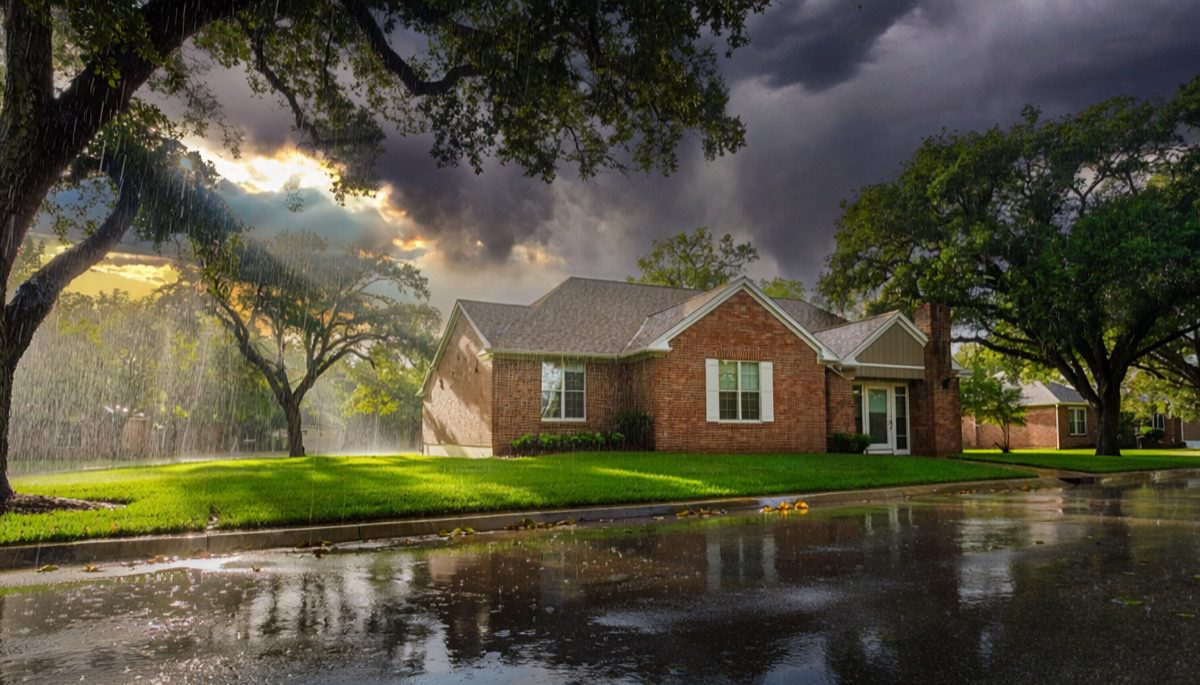
The Atlantic season runs June 1 to November 30 and peaks around September 10, per the National Hurricane Center. It is not an every-year event here. From 2008 through 2024, three hurricanes did serious damage in the Houston area: Ike in 2008, a category 2 at landfall near Galveston; Harvey in 2017, a category 4 at landfall near Port Aransas that then rained on Houston for days; and Beryl in 2024, a category 1 that passed over the west side of the metro. Most years pass without one. What you do about it is practical: price wind and flood coverage before you offer.
Has most of Houston flooded?
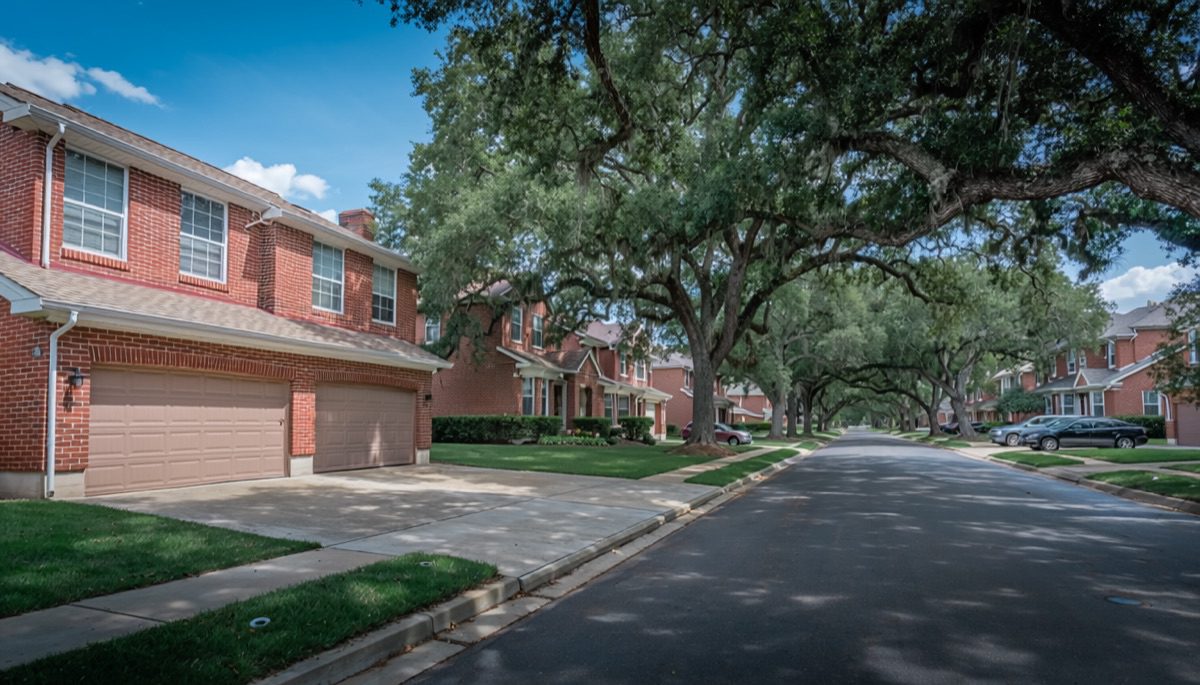
No. Most Houston homes have never flooded. Harvey is the largest flood on record here, and about 154,000 Harris County homes took water, per Harris County Flood Control District figures reported by the Houston Chronicle. That is a lot of homes, and it is still a small share of the county. The Census Bureau counts about 2.01 million housing units in Harris County as of July 2025, which puts Harvey’s total at roughly 8 percent of today’s count. The county had fewer homes in 2017, so the share that year was a little higher. The question is never Houston. It is the address. Look it up on my Houston flood zone map by address, which reads FEMA’s current map, and rely on FEMA’s designation and the seller’s disclosure for that house.

How bad is the traffic?
It is real, and it depends on the corridor. That is why the commute section comes first on this page. Pin the job address, live on that corridor, and you skip most of it. I do not print drive-minute ranges I cannot source.
Sources: National Weather Service Houston/Galveston, 1991-2020 climate normals for Houston Intercontinental. National Hurricane Center, Atlantic season dates and peak. NWS Houston/Galveston storm summaries for Ike (2008) and Harvey (2017); National Hurricane Center Tropical Cyclone Report AL022024 for Beryl. Harvey homes flooded: Harris County Flood Control District, reported by the Houston Chronicle. Housing units: U.S. Census Bureau QuickFacts, Harris County, Texas, July 1, 2025 estimate (2,012,848). Pulled September 20 and 21, 2026.
The honest answer
Should I rent first or buy on arrival?
Both work. The right one depends on how much you already know, not on a story about the market. Rent first when the office location could still move, you cannot visit before the truck, or you are choosing between two corridors you have never driven. Buy on arrival when the job pin is stable, you have walked two or three areas, and you can run flood and tax on specific addresses.
Rent first when
The campus assignment is still in flux. You have school-age kids and have not sat in the afternoon car line. You are choosing between, say, Katy and Pearland and cannot tell them apart yet. A one-year lease in that case is information, not a delay.
Buy on arrival when
You already know the corridor. You can do the FEMA address lookup and the appraisal-district stack on the shortlist. You have a Texas-licensed pre-approval. You are not trying to time a dip. You are trying to land in the right school line and the right flood zone.
The timeline
What is the 90-day timeline for an out-of-state move?
Most out-of-state purchases run on a 60-to-90-day clock, not a weekend trip. The first month is pre-approval and a short list. The second is showings and an offer. The third is option period, appraisal, insurance, and close. Two trips usually. Sometimes one, if you are decisive.
Day 90 to Day 60
Get fully pre-approved with a Texas-licensed lender. Send me the job address, school needs, and a budget that already includes property tax and HOA. I will come back with a corridor shortlist and the flood and MUD questions to run on it. From there I send you homes, and we talk them through before I schedule showings.
Day 60 to Day 30
Walk two or three areas, and I schedule showings on the homes that held up in our conversations. Check the FEMA zone and the appraisal-district stack on any address you would actually buy. Write the offer with a real option period so the inspection report can be read on a call, not in an airport.
Day 30 to close
Inspection, appraisal, insurance quotes (including flood if the zone or the lender requires it), and the walk-through. Confirm wire instructions by phone. Close in person, by mobile notary, or by RON if your lender and title company allow it. Apply for the homestead exemption after you own the house and occupy it.
After close
Utilities, mail forwarding, and the homestead application with Harris County Appraisal District or Fort Bend Central Appraisal District. The exemption is not automatic. Missing the filing window costs you the school-tax slice we just did the math on.
The longer checklist lives on Moving to Houston checklist.
The relocation library
Which Houston relocation guides should I read next?
After this page, read the spoke that matches the decision you are actually making. If you are coming from California, start there. If the ZIP is the next question, use the map. If flood is the question you skipped, stop and run the address tool.
Where you are moving from
Moving to Houston from California
Moving to Houston from New York
Moving to Houston from Seattle
Moving to Houston from Denver
Moving to Houston from Chicago
The honest pros and cons of moving to Houston
Investing in Houston from out of state
School districts, the family filter
In Texas a school district is its own government, and its lines ignore city limits.
Houston school districts, with 2026 TEA ratings
Houston ZIP codes by school district
Moving to Houston with family
Best Houston suburbs for families
Relocating at $1 million and up
Executive and physician moves tend to narrow to Memorial and the Memorial Villages, River Oaks and Tanglewood, West University and Bellaire, The Woodlands, Sugar Land, Sienna, and Cinco Ranch in Katy. I carry the LUXE designation and I will walk the deed restrictions, village versus city taxes, lot, flood zone, and campus feed on each address.
The process
How do you work with relocating buyers?
I work as the local buyer-side agent. First call, loan or cash, homes and conversations, then showings. After that I quarterback option period through close and the homestead filing after.
- First call. I get granular on the search first: lifestyle, family stage, employer location, school priorities, and timeline. I will tell you if the budget and the corridor do not meet.
- Loan or cash. Any offer needs proof of one or the other, so we confirm it early. If you are financing, I can introduce Texas-licensed lenders I have closed with. Out-of-state W-2s do not fluster them.
- Homes, then showings. I send you homes, we talk them through over several conversations, and then I schedule showings. On your first trip I usually meet you at the first property. Sometimes we meet nearby first, at my office if it is close or a coffee shop if not, to talk things through in person, and then we start showings. I plan the route so it is efficient, not chaotic. Read how to plan a Houston house-hunting trip before you book flights.
- Offer, contract, close. Option period, appraisal, financing, insurance, walk-through, and the wire-instruction call. Same Texas contract as a local buyer.
- After close. Homestead application with the appraisal district. Utilities and the local intros you actually need.
My service area is Greater Houston, including Katy, Cypress, Sugar Land, Pearland and Spring.
Relocation · Buyer Consultation
Moving to Houston from out of state?
I help relocators pair market guidance with neighborhood fit, school strategy, and the life logistics that make the move the easy part — not the hard part.