
Update, October 30, 2026: The spring figures in this guide are dated. Freddie Mac’s 30-year average was 7.24% on October 29, 2026, and that average isn’t an investment-property quote, so the 6.75% example below would cost more today. Use your own Loan Estimate.
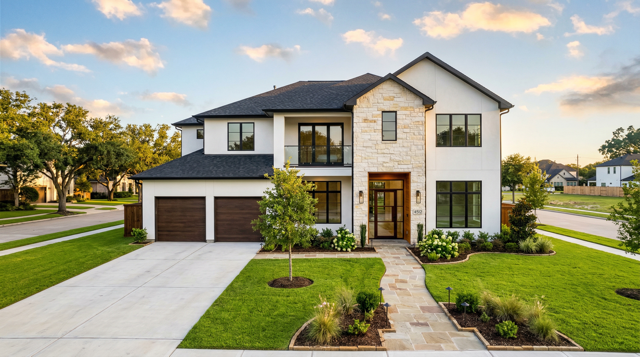
A new-construction rental is one option to compare with resale homes. Start with proposed rent, price, financing and all operating costs, then verify restrictions and warranties. A new home does not establish a return target or future appreciation.
I’m Eddie Weir, REALTOR® with REMAX in Greater Houston. I work with first-time investors across Katy, Cypress, Pearland, Spring, Sugar Land, Richmond, and the rest of the metro’s growth corridors. This guide is what I’d want a brand-new investor to know before they walk into a builder’s model home.
What does new construction offer a first-time investor?
New homes can mean fewer early repairs, a builder warranty and builder incentives, which matter when you’re new to landlording. None of that makes a deal work by itself, so test each one against the numbers.
What you may get with new, and what to verify:
- Newer systems: Fewer early repairs are likely, but still inspect the home and budget for them.
- Warranty: Often 1 year on workmanship, 2 years on mechanical and distribution systems (plumbing, electrical, HVAC) and up to 10 years on structure. Read the exclusions.
- Incentives: Real money when they apply. Confirm in writing that they apply to an investor, then check the expiration, lender conditions and actual effect on cash-to-close.
- Utilities: Compare documented efficiency features and available utility history rather than assuming a monthly savings figure.
- Rental demand you can check. Look at recent closed leases, days to lease and concessions for similar homes in the community, and confirm the HOA allows rentals. Screen every applicant by the same written criteria.
How much does a new construction investment property cost in Houston in 2026?
Compare current candidate homes by location, builder, lot and floor plan. The spring 2026 figures below are dated context and hypothetical budgeting examples, not current inventory or a premium every new home commands.
New construction price ranges by Houston submarket (spring 2026):
Scroll sideways to see every column.
| Area / Community | Price Range | Investor Notes |
|---|---|---|
| Katy / Elyson | $350,000 — $550,000 | Toll Brothers, Perry Homes, Highland Homes active. Compare recent closed leases for the exact subdivision. |
| Cypress / Bridgeland | $320,000 — $500,000 | Rapid-growth corridor. Cy-Fair ISD. Multiple builders offering incentives on inventory homes. |
| Richmond / The George | $280,000 — $450,000 | New 1,500-acre master-planned community. Lower entry point. Fort Bend County growth path. |
| Pearland / Shadow Creek Ranch | $300,000 — $420,000 | Medical Center commuter demand. Compare recent closed leases against the payment before assuming a rent-to-price ratio. |
| Spring / The Woodlands area | $340,000 — $550,000 | ExxonMobil and corporate relocation demand. Higher buy-in, so test the rent against the payment carefully. |
| Richmond / Evergrove | $400,000 — $700,000+ | Toll Brothers and Tri Pointe. 1,655 planned homes. Higher entry price, so test the rent against the payment carefully. |
Ranges reflect typical asking prices as of spring 2026. Verify current pricing with each builder. Source: HAR MLS and Houston-area builder sales offices.
What builder incentives are available to Houston investors in 2026?
In spring 2026, active listings were up 8.7% to nearly 35,000 homes across the metro, and builders wanted to move completed inventory. Ask what’s available now, because incentives change and not all of them apply to investors.
Common incentives I saw in spring 2026:
- Closing cost contributions: $5,000–$15,000 toward your closing costs. On a conventional investment loan, Fannie Mae caps seller and builder contributions at 2% of the price, about $7,400 on the $370,000 example below.
- Temporary buydowns: Check the loan first. Fannie Mae doesn’t allow temporary buydowns on investment properties, so this only applies if a DSCR or portfolio lender confirms it. Then compare the subsidized and fully indexed payments.
- Upgrades: Compare cost with the features supported by comparable rental demand; an upgrade does not establish tenant quality or a rent premium.
- Flex cash / price reductions: A lump sum the buyer applies to closing costs, rate buydown, or sticker price. Chesmar Homes has offered up to $20,000 in select communities.
One thing to know up front:
Verify investor eligibility for every incentive in writing. Disclose your intended occupancy accurately; do not assume owner-occupant terms apply to a rental.
Check the property before the projection.
Let’s review the home, rental restrictions and the assumptions you want to test.
Book a 30-minute callWhat’s the expected ROI on a Houston new construction rental?
Returns depend on collected rent, expenses, vacancy, financing and sale proceeds. The walkthrough below is hypothetical, not a rental quote or expected return. Replace every assumption with property-specific evidence.
Sample analysis: New construction home in Cypress, TX
Scroll sideways to see every column.
| Item | Amount |
|---|---|
| Purchase price | $370,000 |
| Down payment (20%) | $74,000 |
| Closing costs (net of builder credit) | $4,000 |
| Total cash invested | $78,000 |
| Monthly rent | $2,000 |
| Annual gross rent | $24,000 |
| Mortgage P&I @ 6.75% | $1,920/mo ($23,040/yr) |
| Property taxes (2.1%) | $7,770/yr |
| Insurance (landlord policy) | $4,200/yr |
| HOA | $2,400/yr |
| Maintenance reserve (0.5% — lower because it’s new) | $1,850/yr |
| Vacancy reserve (8%) | $1,920/yr |
| Property management (10%) | $2,400/yr |
| Total annual expenses | $43,580 |
| Annual net cash flow | –$19,580 |
Wait — the cash flow is negative?
Negative cash flow requires additional cash from the owner. Test whether your reserves and financial plan can support that risk without relying on rent increases, refinancing or appreciation.
- Principal paydown. About $3,155 of the loan is paid down in year one. In this example that’s far less than the $19,580 you put in to cover the shortfall, so it doesn’t make the loss go away.
- Price changes: Future appreciation is uncertain. Test flat and declining-value scenarios as well as growth.
- Tax treatment. Depreciation and expenses can create a paper loss, but passive-loss rules can limit using it against your income, especially above $100,000 of modified adjusted gross income, and depreciation can be recaptured at sale. Ask your CPA first.
- Rent changes: Future increases are uncertain. Underwrite current comparable rents and allow for vacancies, concessions and turnover.
Total return can include cash flow, principal reduction and a gain or loss on sale, less transaction costs. Tax treatment depends on the owner and property. Review assumptions with qualified financial and tax advisers.
Mistakes first-time investors make on Houston new construction
I see the same handful of mistakes over and over. Avoiding them can save thousands and years of headaches.
Top mistakes:
- Discussing representation too late. The builder’s sales representative works for the builder. Discuss your representation, services and compensation before relying on someone to act for you. Broker compensation is negotiable and belongs in the written buyer-representation agreement. In practically every case, the builder pays my compensation — I confirm it with the builder before our first visit.
- Choosing upgrades that don’t increase rent. First-time investors overspend on cosmetic upgrades. Premium counters and tile might add $30,000 to the purchase price but only $50–$100/month in rent. Focus on what tenants actually pay for: covered patios, fenced yards, smart-home features, energy-efficient appliances.
- Ignoring HOA rental restrictions. Some master-planned community HOAs restrict or prohibit rentals entirely. Others impose minimum lease terms (often 12 months) or cap the number of rentals in the community. I review HOA documents before any investment purchase to confirm the property can be rented.
- Underestimating Texas property taxes. No state income tax, but property taxes run 2.0–2.3% of assessed value for investment properties (no homestead exemption applies). On a $370,000 home that’s $7,400–$8,500/year. Investors moving from lower-tax states are routinely surprised.
- MUD and flood checks. Many master-planned communities carry a MUD, which can take the combined rate to 2.5%-2.8%. On $370,000 that’s up to about $10,400 a year instead of $7,770. Pull the exact taxing entities and the FEMA zone for the address before you write an offer.
- Missing the rental timeline in deed restrictions. Some builders include deed restrictions blocking rentals for the first 1–2 years after purchase to protect owner-occupancy ratios during build-out. Verify before closing.
- Skipping the independent inspection. “New” doesn’t mean “perfect.” Even new construction can have improper grading, HVAC issues, plumbing leaks behind walls. Hire an independent inspector before closing — the builder warranty doesn’t substitute for inspection.
Which Houston builders work well for investment properties?
Builder policies on investment purchases vary, and HOA restrictions or incentive limits can rule one out. The builders below are active in Houston’s growth corridors. Confirm each one’s investor policy before you count on it.
Builders active in these corridors (2026):
- Perry Homes — one of Houston’s largest private builders. Active in Bridgeland, Elyson, Sienna, and many Fort Bend and Harris County communities. Quality construction and strong resale values.
- Highland Homes — mid-to-premium price point. Strong presence in Katy and Cypress. Floor plans with rental appeal.
- Chesmar Homes — competitive pricing with generous incentive packages (up to $20,000 in upgrades in select communities). Active in Richmond and Sugar Land.
- David Weekley Homes — premium build quality. Active in multiple Houston corridors. Strong warranty program.
- Castlerock Communities — affordable entry point. Active in Spring, Conroe, and northwest Houston.
- LGI Homes — budget-friendly new construction. Move-in ready inventory often available with appliances and landscaping included. Popular with investors targeting max cash flow.
I maintain working relationships with sales teams across these builders. I can help you compare inventory, negotiate the incentive package, and identify which opportunities actually pencil for your scenario.
FAQs: First-time investors + Houston new construction
Do I need a real estate agent to buy new construction in Houston?
The builder’s sales agent represents the builder. If you choose buyer representation, discuss the services and negotiated compensation in the written agreement. In practically every case, the builder pays my compensation — I confirm it with the builder before our first visit. TREC explains the buyer-representation requirements.
Can I rent the home out immediately after closing?
In most Houston communities, yes — but verify before signing the builder contract. Some HOAs restrict rentals for the first 12–24 months, impose minimum lease terms, or cap the percentage of rentals allowed in the community. I review these restrictions as part of due diligence for every investor client.
Inventory home or build-from-scratch as a first-time investor?
For most first-time investors, a completed or near-completed inventory home is the better choice. You close faster (often 30–45 days), avoid construction delays, lock in a known price, and start collecting rent sooner. Builders also negotiate more aggressively on inventory they want to move. Custom or semi-custom builds make more sense for experienced investors with specific floor-plan needs.
What mortgage rate should I expect for an investment property in 2026?
Start above the survey average. Freddie Mac’s 30-year average was 7.24% on October 29, 2026, and investment-property quotes usually run higher, so get your own number. Request current investment-property Loan Estimates using the same price, down payment and loan assumptions, then compare interest, points, fees and payments.
How much cash should I plan for as a first-time investor?
On the $370,000 example above, about $78,000 at closing: 20% down plus $4,000 of closing costs. That same example runs $19,580 a year short, so budget that shortfall, repairs and leasing costs separately. Your lender and title estimates set the real number.
Related resources: Open the calculator
Disclaimer: The information on this page is for educational and informational purposes only and does not constitute financial, investment, legal, or tax advice. All projections, estimates, and calculations are based on assumptions that may not reflect actual market conditions. Past performance is not indicative of future results. Tax laws change and vary by individual situation — always consult a qualified CPA before relying on any tax strategy described here. Consult with a qualified financial advisor, CPA, and/or attorney before making any investment decisions.
Discuss your first rental purchase.
Bring your target homes and questions about location, condition and ownership costs.
Book a 30-minute call“Show up, tell the truth, close on time.”
Sources & data: Houston Association of REALTORS® MLS (March 2026) · Houston Agent Magazine · Tricoast Homes · Steadily. Builder incentive information is subject to change — verify current offerings before purchasing. Each office independently owned and operated. Equal Housing Opportunity. Figures last updated: May 13, 2026. Rate note added October 30, 2026.